
Black Webbing Strap Rolls – 10m Lengths
Shop black webbing strap in 10m rolls, available in widths from 10mm to 100mm for compatible sewing, bag-making, repair, craft and general organisation projects.
Choose the width to suit your design and any buckles, adjusters or other hardware being used. Webbing width alone does not establish its material, breaking strength or suitability for safety-critical applications.
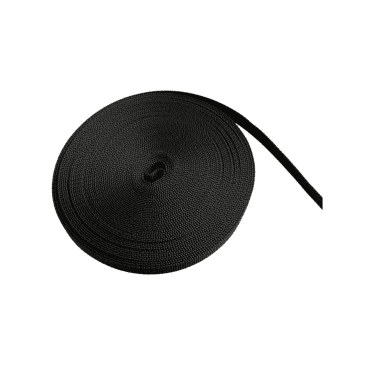
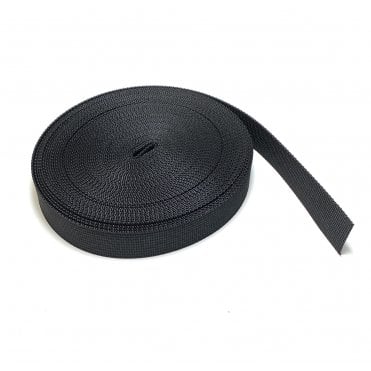
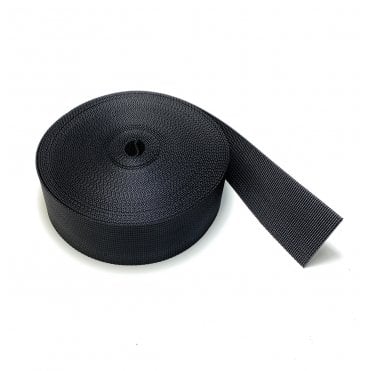
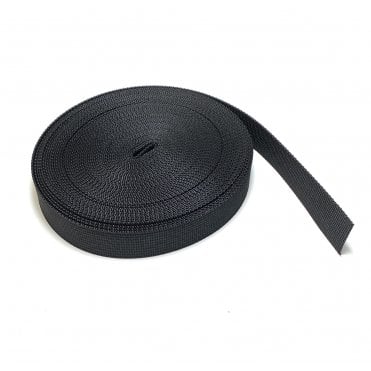
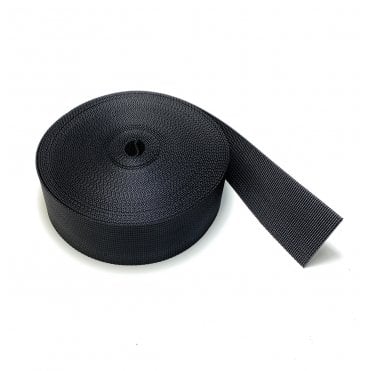
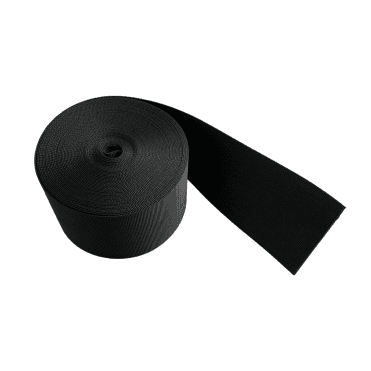
Black Webbing Strap Rolls
Webbing is a flat woven material used for making straps, handles, loops, edging and reinforcement in suitable sewing, repair and craft projects. The current range is supplied in black 10m lengths with several widths available for different designs and compatible hardware.
Webbing is a component material rather than a finished restraint. Its performance depends on the fibre, weave, thickness, stitching, end fittings, buckles and construction of the finished item.
Available Webbing Widths
Choose from the following widths:
- 10mm
- 20mm
- 25mm
- 38mm
- 50mm
- 75mm
- 100mm
Narrow webbing may suit smaller fittings and compact sewing projects, while wider webbing provides a larger contact or sewing area. A wider strap is not automatically stronger because material, weave and construction also affect performance.
How to Choose the Correct Webbing
- Width: match the webbing to the design and the internal width of any compatible buckle, slider, ring or adjuster.
- Material: confirm the fibre composition because nylon, polyester and polypropylene have different properties and must not be treated as interchangeable.
- Thickness: check that the webbing will pass through the intended hardware and can be folded or stitched as required.
- Weave: consider the flexibility, surface texture and edge construction needed for the project.
- Length: calculate the complete route, folds, overlaps, loops and reasonable cutting allowance before ordering.
- Stitching: select a suitable needle, thread and stitch pattern for the webbing and adjoining material.
- Environment: verify any required resistance to moisture, ultraviolet exposure, abrasion, chemicals or temperature.
- Performance: use documented breaking-strength or working-load information for the exact webbing rather than estimating performance from its width.
Common Webbing Applications
Depending on the exact specification and finished construction, webbing may be used for:
- Bag handles and shoulder straps
- Backpack and luggage repairs
- Sewing and upholstery projects
- Craft and costume making
- Equipment organisation
- Non-safety-critical storage straps
- Fabric edging and reinforcement
- Replacement straps on suitable household items
These are general examples rather than universal suitability claims. Check the webbing specification and the requirements of the finished item before use.
Matching Webbing with Buckles and Adjusters
The stated webbing width should normally correspond with the internal opening of the intended buckle, slider or ring. Thickness and weave must also be considered because webbing that is too thick may not pass through the fitting or adjust correctly.
A buckle does not create a verified load rating by itself. The webbing, hardware, stitching and complete assembled strap must all be suitable for the intended application.
Measuring and Cutting Webbing
- Plan the finished strap and identify every fold, overlap, loop and attachment point.
- Check the required width against all buckles, sliders and other fittings.
- Add sufficient material for stitching, adjustment and finishing the ends.
- Mark the cutting position without distorting or stretching the webbing.
- Cut using a method appropriate for the confirmed material.
- Finish the cut ends using the method specified for that webbing.
- Inspect the completed item before placing it into use.
Do not assume that every synthetic webbing can be finished using the same method. Heat treatment, adhesives and stitching can affect different fibres differently.
Safety and Load Limitations
Do not use general-purpose webbing for climbing, abseiling, fall protection, lifting, towing, vehicle restraint, load-rated tie-downs, personal safety equipment or any application where failure could cause injury or property damage.
A claim such as heavy duty does not provide a measurable working-load limit. Safety-critical applications require webbing and completed assemblies with appropriate testing, ratings, traceability and certification.
Inspect webbing regularly for cuts, fraying, damaged edges, pulled fibres, chemical contamination, heat damage, ultraviolet deterioration and failed stitching. Replace damaged webbing rather than attempting to conceal or reuse a weakened section.
Related Products
- Browse hook and loop products for adjustable reusable straps, tapes and fastening products.
- Explore cable ties for conventional cable bundling and specialist cable-management applications.
Frequently Asked Questions
Which webbing width should I choose?
Choose a width that suits the finished design and matches the internal width of any buckles, sliders or rings. Also check the webbing thickness and required sewing area.
Is wider webbing always stronger?
No. Width alone does not determine strength. Fibre, weave, thickness, edge construction, stitching and attached hardware all affect the finished product.
Can this webbing be used outdoors?
Only when the exact material is documented for the expected moisture, ultraviolet exposure, temperature and duration of use. Black colour alone does not establish outdoor suitability.
Can this webbing be used for climbing?
No. General-purpose webbing without the required testing, safety rating and certification must not be used for climbing, fall protection or other life-support applications.
How should cut webbing ends be finished?
The correct method depends on the confirmed fibre and weave. Follow the instructions for the individual webbing rather than applying one finishing method to every material.
Can webbing be washed?
Only follow washing instructions documented for the exact material. Water temperature, detergents, agitation and drying methods can affect webbing and any attached hardware or stitching.