
Entrance Mats, Door Mats & Barrier Matting
Shop entrance mats and door mats for suitable homes, offices, shops and commercial entrances. Compare absorbent barrier mats, outdoor rubber scraper mats, coir matting, washable door mats and custom logo options in a wide choice of sizes and colours.
Choose by location, dimensions, thickness, material, backing, documented foot-traffic rating and cleaning method. No entrance mat is universally slip-resistant or weatherproof, so check the exact product specification and intended floor surface before ordering.
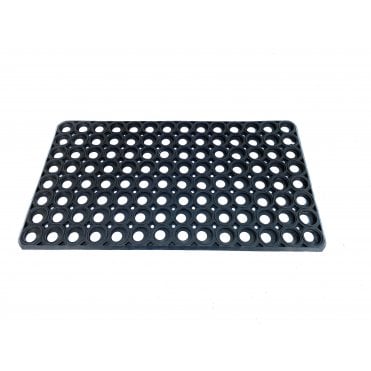
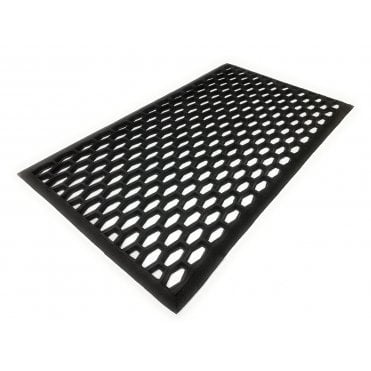
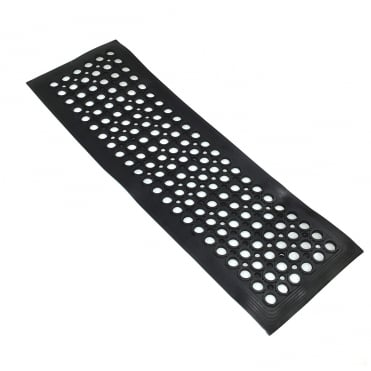
Entrance Mats and Door Mats
Entrance mats provide a practical surface for wiping footwear and controlling dirt or moisture at suitable doorways. The On1shelf range covers domestic door mats, commercial barrier mats, rubber scraper and drainage mats, coir matting, washable mats and custom logo options.
These products differ considerably in construction and intended use. An absorbent indoor mat, an outdoor rubber scraper mat and a traditional coir doormat should not be treated as interchangeable simply because each can be positioned near an entrance.
Types of Entrance Mat
Absorbent Barrier and Dirt-Control Mats
Absorbent entrance mats use textile fibres or pile constructions intended to collect compatible moisture and fine dirt from footwear. Different products have different water-retention, soil-removal, wear and cleaning specifications.
Where a particular performance level is required, check the documented test method or supplier classification for the exact mat. Do not apply one absorbency or foot-traffic rating to every product within a range.
Rubber Scraper and Drainage Mats
Rubber entrance mats commonly use raised patterns, fingers, ridges or open drainage holes to provide a textured wiping surface. They may be considered for suitable external, sheltered or demanding entrance areas where that environment is documented for the selected product.
A rubber construction does not automatically prove outdoor suitability, slip resistance, oil resistance or a heavy-duty traffic classification. Check the material, drainage design, temperature range and supporting floor requirements.
Coir Door Mats and Coir Matting
Coir matting uses natural fibres obtained from coconut husks and is available as individual door mats or PVC-backed rolls. Roll products can be useful where matting must be cut to fit a particular entrance or matwell.
Confirm the roll width, ordered length, overall thickness and backing before cutting. Natural coir should not automatically be described as suitable for prolonged unsheltered outdoor exposure.
Decorative Door Mats
Decorative doormats combine a wiping surface with a choice of colours, patterns and shapes. The range includes rectangular, semicircular and ornamental rubber designs for suitable domestic entrances, hallways, porches and sheltered areas.
Appearance should not replace practical checks such as door clearance, floor compatibility, edge profile, cleaning method and documented indoor or outdoor suitability.
Custom Logo Entrance Mats
Custom logo mats provide an entrance surface featuring supplied branding, text or artwork. Before ordering, check the available dimensions, colours, artwork format, printable area, proofing process, production time and whether the selected construction is intended for indoor or outdoor use.
A digital design proof should confirm the proposed layout, but colours displayed on a monitor may not reproduce identically on the finished textile or rubber surface.
How to Choose the Correct Entrance Mat
- Location: establish whether the mat will be indoors, outdoors or beneath a sheltered entrance.
- Main function: decide whether the priority is scraping coarse dirt, absorbing moisture, decorative use, drainage or displaying a logo.
- Dimensions: measure the complete available width and length rather than relying on a nominal doorway size.
- Thickness: check clearance beneath the door and against adjoining thresholds or flooring.
- Installation: determine whether the mat will be loose laid, fitted into a matwell or installed as part of a larger entrance system.
- Material: compare coir, rubber, polypropylene, nylon and other documented constructions.
- Backing: check the actual backing material and its compatibility with the supporting floor.
- Traffic level: use a documented domestic, commercial or foot-traffic classification where available.
- Cleaning: confirm whether the mat should be vacuumed, shaken, extracted, hosed or machine washed.
- Accessibility: consider edge height, movement, wheel access and whether the mat can be fitted level with adjoining surfaces.
Measuring the Entrance
- Measure the maximum width and length available for the mat.
- Check the full movement of the door, including any weather strip or low threshold.
- For a matwell, measure its width, length and depth at several points rather than assuming it is perfectly square.
- Identify the route people actually take after passing through the entrance.
- Check whether the selected mat is supplied in a fixed size, cut length or complete roll.
- Allow for edging, trimming and any documented installation tolerance.
- Confirm that the finished mat will remain level, stable and properly supported.
Indoor and Outdoor Entrance Mats
An indoor mat is normally positioned after the external threshold and should be selected for the expected moisture, dirt and pedestrian traffic. Textile barrier mats must not automatically be placed outdoors merely because they have a rubber or vinyl backing.
An outdoor mat should be documented for the expected rain, sunlight, temperature and drainage conditions. Water must not be allowed to collect beneath or around a mat where it could affect the supporting surface or create an unsuitable entrance condition.
Where both coarse dirt and moisture must be controlled, separate compatible scraping and absorbent stages may be considered. The required arrangement depends on the entrance layout, available space and documented mat performance.
Commercial Entrance Mat Considerations
Commercial entrances may experience greater traffic, wheeled movement and moisture than a domestic doorway. Check the documented wear classification, dimensions, backing, edge design and cleaning schedule for the exact product.
A mat labelled heavy duty should provide a meaningful traffic or wear specification. The phrase alone does not establish its expected service life or suitability for a particular shop, office, school, warehouse or public building.
Loose mats may not be suitable for every public access route. Where wheelchair users, mobility aids, pushchairs or trolleys are expected, the complete installation should be assessed for movement, edge height, firmness and level access.
Positioning and Installation
The supporting surface should be clean, dry, stable and compatible with the selected mat and backing. Remove loose dirt, grease and cleaning residue before placing the mat.
Position entrance matting where people naturally walk rather than assuming everyone travels straight forward from the doorway. The mat should lie flat without curled corners, raised edges or unsupported sections.
For matwell installations, confirm the required thickness and fitting method before cutting. Do not force oversized matting into a recess because buckling or raised areas can result.
Check loose-laid mats regularly because movement can depend on the mat construction, floor surface, contamination and direction of traffic. A gripper or rubber backing must not be treated as a universal guarantee against movement.
Cleaning and Inspection
Remove accumulated dirt and moisture frequently enough for the entrance conditions. Follow the product-specific care instructions because cleaning methods suitable for rubber, coir and textile mats can differ.
Only describe a mat as machine washable where that method is explicitly documented. Check the permitted temperature, detergent, machine capacity and drying method before washing.
Inspect mats for movement, curled edges, worn pile, damaged backing, cracking, blocked drainage holes and contamination beneath the surface. Replace or reposition a mat that can no longer be maintained securely.
Typical Applications
Subject to the specification of the selected product, entrance mats may be considered for:
- Front and back doors
- Hallways and sheltered porches
- Office and reception entrances
- Shops and suitable commercial premises
- Schools and community buildings
- Workplace and warehouse entrances
- Hotels and hospitality areas
- Custom-branded reception areas
These are general application examples. Suitability depends on the product, supporting floor, installation, traffic, environment and maintenance schedule.
Related Mats and Flooring
- Browse industrial mats for specialist workplace, contamination-control and hazard matting.
- Choose anti-fatigue mats for suitable standing workstations.
- Explore industrial rubber matting and flooring for rolls, cut lengths and floor tiles.
- Shop PVC garage flooring rolls for continuous PVC floor covering.
- Use floor cable protectors for compatible temporary floor-level cable routes.
Frequently Asked Questions
What is the difference between an entrance mat and a door mat?
The terms overlap. Door mat often describes a smaller domestic product, while entrance matting can include larger commercial, absorbent, scraper, matwell and custom-logo products.
Which entrance mat is suitable for outdoor use?
Choose a product explicitly documented for the expected rain, sunlight, drainage and temperature conditions. A rubber backing alone does not establish outdoor suitability.
Can coir matting be used outdoors?
Coir is generally better protected from prolonged saturation and weather exposure unless the exact product is documented for unsheltered outdoor use.
Does an entrance mat prevent slips?
No mat can guarantee a slip-free entrance. Correct product selection, coverage, installation, cleaning and control of tracked-in moisture must be considered together.
How large should an entrance mat be?
The mat should fit the available area and cover the route people actually use. Check the door swing, threshold, floor layout and whether additional scraping or absorbent stages are required.
Can entrance mats be machine washed?
Only wash a mat by machine where this is specified for the exact product. Check the permitted temperature, detergent, machine capacity and drying instructions.
What should I measure for a recessed matwell?
Measure the width, length and depth at several points. Matwells may not be perfectly square or consistently deep, so use the actual dimensions when planning the finished mat.
Does rubber backing stop a mat from moving?
Not in every situation. Movement depends on the backing, supporting floor, contamination, traffic and installation. Inspect loose-laid mats regularly.