
Cable Ties, Zip Ties & Cable Management Fixings
Shop cable ties and zip ties for cable management, fastening and identification. Choose from standard nylon, heavy-duty, coloured, releasable, stainless steel and specialist cable ties, together with fixing mounts and installation tools.
Compare the material, length, width, maximum bundle diameter, locking construction and verified tensile strength before selecting a cable tie.
Shop by type: Standard Nylon | Heavy Duty | Coloured | Releasable | Stainless Steel | Fixing Mounts | Installation Tools | Special Cable Ties
Cable Ties for Trade, DIY and Cable Management
Cable ties provide a simple way to bundle cables, organise wiring and secure suitable lightweight items. They are also commonly called zip ties or tie wraps. Different materials, dimensions and locking constructions are available for everything from everyday home cable organisation to electrical, automotive, workshop and industrial installations.
The correct cable tie cannot be chosen from length or colour alone. Check the strap width, maximum bundle diameter, material, locking method, verified minimum loop tensile strength and expected operating conditions for the individual product.
Shop Cable Ties by Type
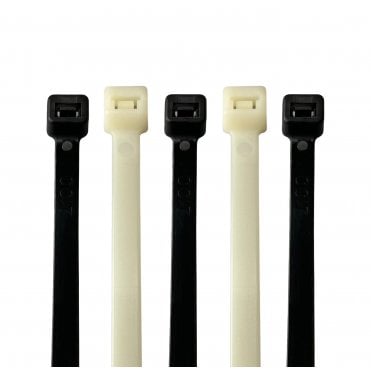
- Standard nylon cable ties: everyday self-locking ties for organising cables, wires and suitable lightweight items.
- Heavy-duty cable ties: wider and stronger constructions for larger bundles and more demanding fastening applications.
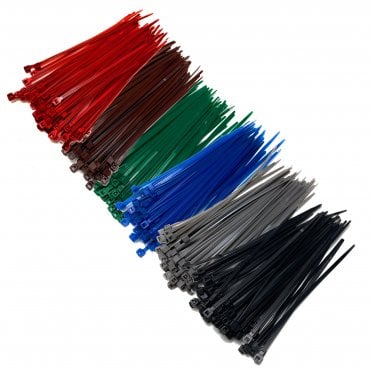
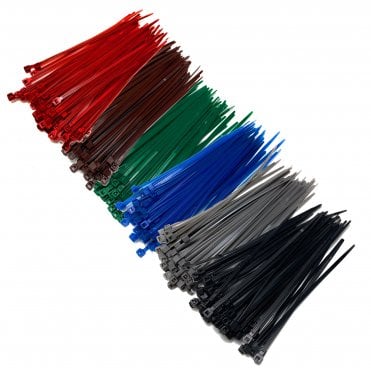
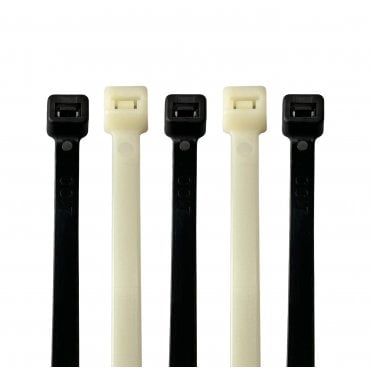
- Coloured cable ties: useful for identification, colour coding, sorting and visually matching an installation.
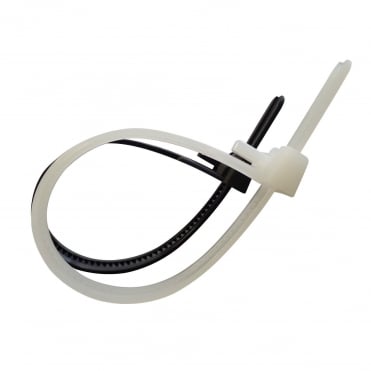
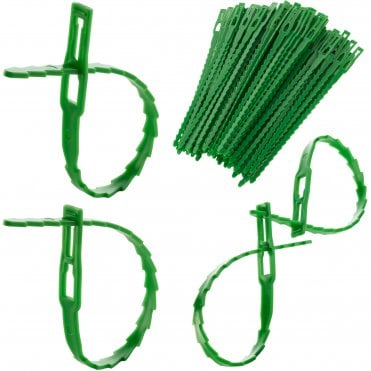
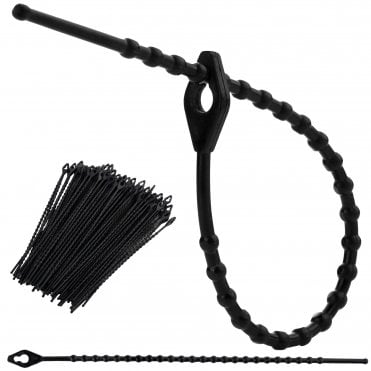
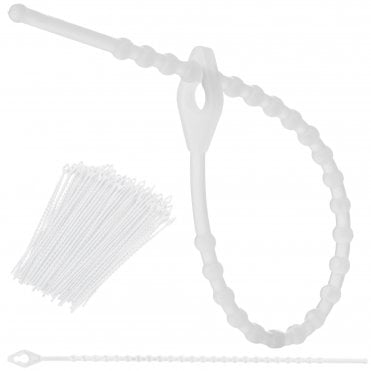
- Releasable cable ties: purpose-made designs that can be opened and adjusted without cutting the strap.
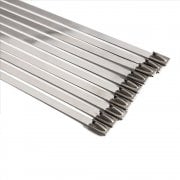
- Stainless steel cable ties: full-metal ties for compatible outdoor, high-temperature and demanding industrial environments.
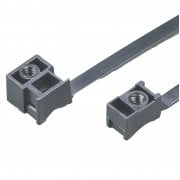
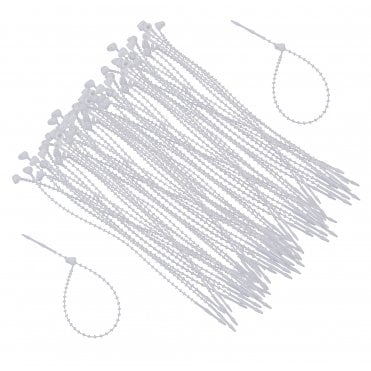
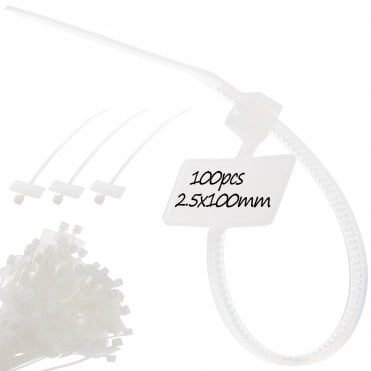
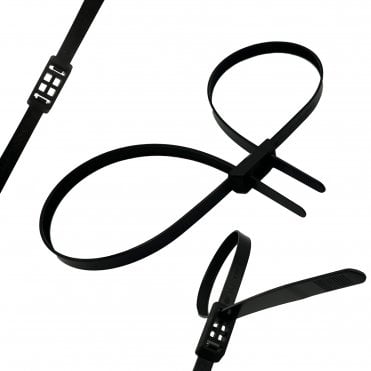
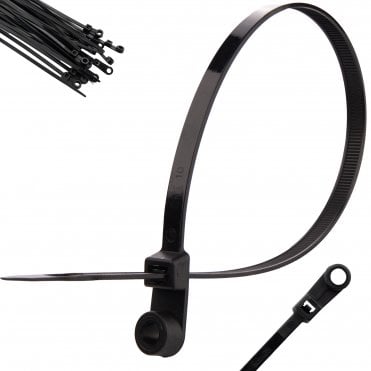
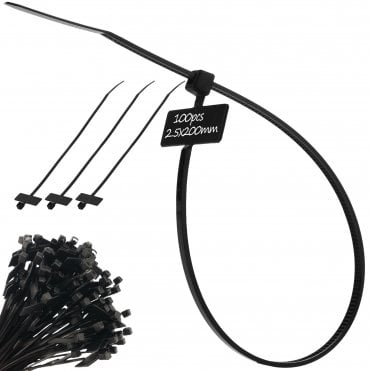
- Special cable ties: detectable, marker, low-profile, double-locking, double-loop and other purpose-specific constructions.
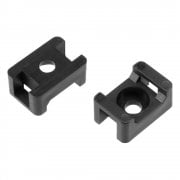
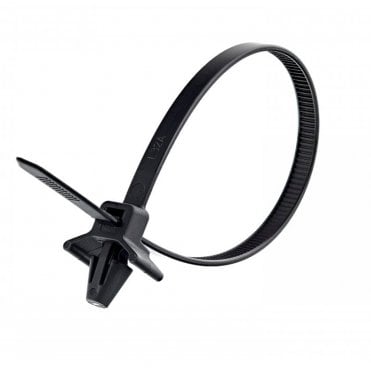
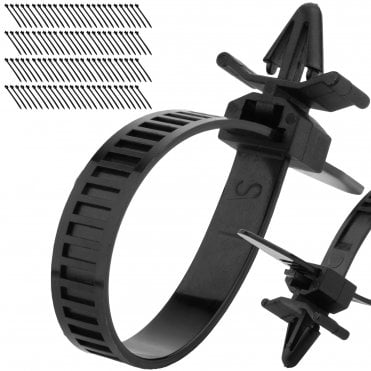
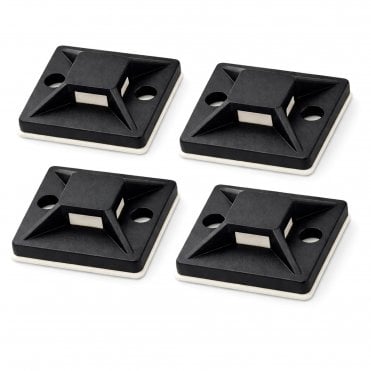
- Cable tie mounts and fixing bases: adhesive, screw-fixing, masonry and panel-mounting products for securing cable routes.
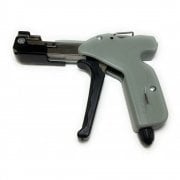
- Cable tie guns and tensioning tools: installation tools for tightening and trimming compatible nylon or stainless steel cable ties.
Standard Nylon Cable Ties
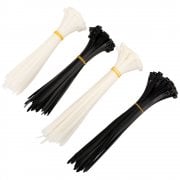
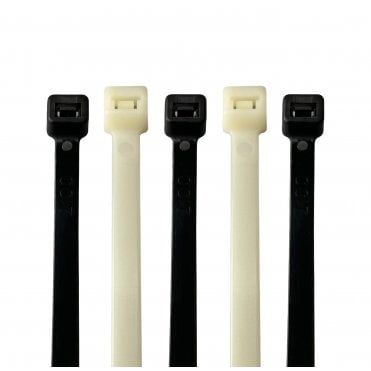
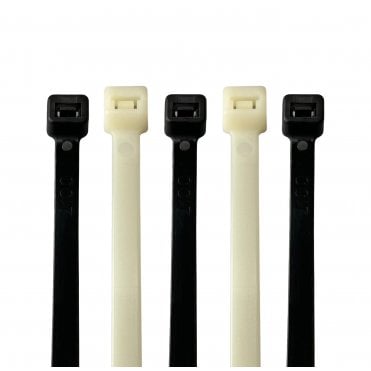
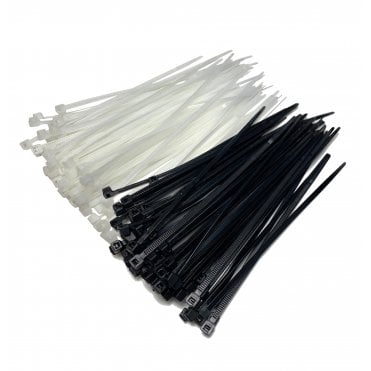
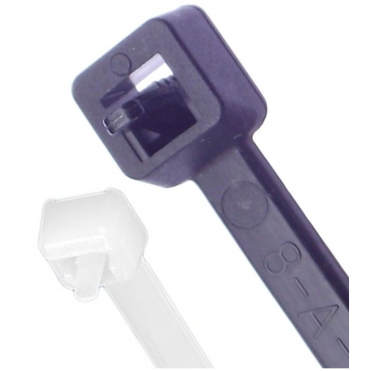
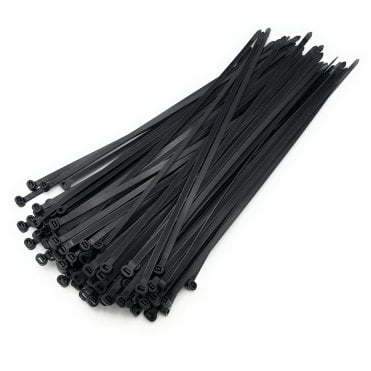
Standard nylon cable ties are suitable for general cable organisation, wiring, packaging and everyday fastening. Most use a one-way locking head and must be cut for removal.
Choose a tie that is long enough to pass around the complete bundle while leaving sufficient tail for correct engagement with the locking head. Check the individual specification before using nylon ties outdoors, near heat, around chemicals or in safety-critical installations.
Heavy-Duty Cable Ties
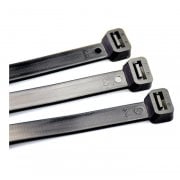
Heavy-duty cable ties generally use a wider or thicker strap and a larger locking head. They can be useful for larger cable bundles, workshop equipment, machinery and suitable automotive or industrial applications.
The term “heavy duty” does not establish a universal strength rating. Two ties of the same width can have different tensile performance because of differences in material, thickness, serrations and locking-head construction. Use only the verified tensile value for the exact product and size.
Coloured Cable Ties
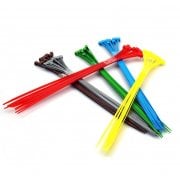
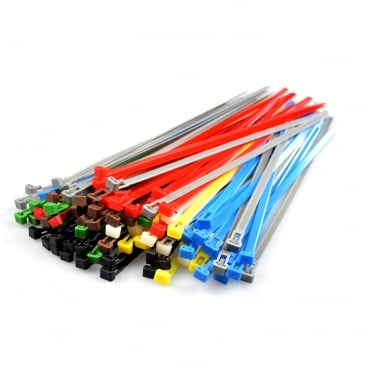
Coloured cable ties make it easier to identify circuits, separate cable groups, organise stock or match an installation. The range may include black, white, natural, red, blue, green, yellow, orange, brown, grey and other colours.
Colour is not a technical performance specification. Black cable ties are not automatically ultraviolet resistant, and natural or white ties are not automatically restricted to indoor use. Check the documented material formulation and operating conditions.
Releasable and Reusable Cable Ties
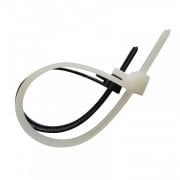
Releasable cable ties include a release tab, lever or another purpose-made mechanism that allows the locking head to be opened. They are useful where cables must be added, removed or rearranged during maintenance.
Check how the release mechanism operates and whether it remains accessible after installation. A standard cable tie should not be described as reusable merely because its pawl can sometimes be forced open with a separate tool.
Stainless Steel Cable Ties
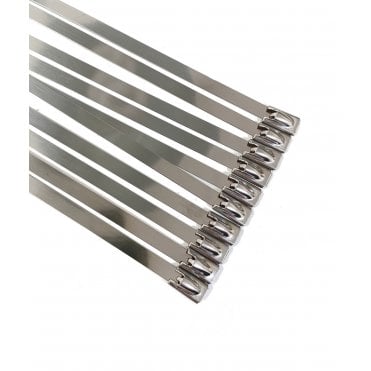
Stainless steel cable ties are designed for installations where ordinary nylon may not provide the required resistance to heat, weathering or environmental exposure. The range can include coated and uncoated ties with different locking mechanisms and stainless-steel grades.
Confirm the exact steel grade, dimensions, bundle diameter, tensile strength, coating and locking construction. Different ball-lock, buckle and ladder-style ties may require different installation methods and tools.
Special Cable Ties
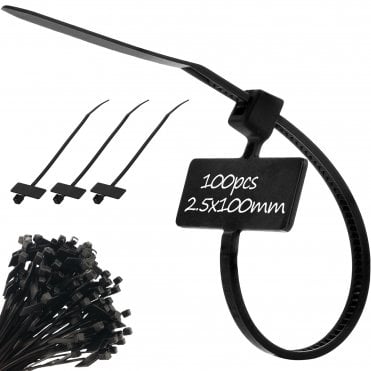
Special cable ties provide a particular feature that is not available from an ordinary nylon tie. Examples include metal-detectable ties, marker ties, low-profile heads, double-locking designs, double loops and nylon ties with a stainless-steel locking pawl.
Select these products according to the required specialist function. Claims relating to metal or X-ray detection, food-contact use, ultraviolet stability, temperature, chemicals or flammability must be confirmed for the exact product.
Cable Tie Mounts and Installation Tools
Cable tie mounts create an anchoring point on a suitable wall, panel, cabinet or item of equipment. Available fixing methods may include adhesive bases, screw-fixing bases, masonry plugs and integrated push-mount ties.
Check the maximum compatible cable-tie width and the requirements of the mounting surface. The strength of the cable tie does not determine the capacity of the complete mounted installation.
Cable tie guns can help installers apply more consistent tension and trim the surplus strap. Nylon and stainless steel ties normally require different tools, and every tool has its own compatible material, width and thickness range.
How to Choose the Correct Cable Tie Size
- Length: determines how far the strap can reach around the bundle.
- Width: affects compatibility with locking heads, fixing bases and installation tools.
- Maximum bundle diameter: shows the largest recommended bundle that can be enclosed.
- Strap thickness: can affect flexibility and tool compatibility.
- Pack quantity: should be selected according to the number of installation points required.
Do not calculate the maximum bundle diameter from the nominal length alone. Part of the strap must pass through the locking head, and different head constructions require different engagement lengths.
Understanding Cable-Tie Strength
Cable-tie strength is normally stated as minimum loop tensile strength. This measures the complete locked loop under defined test conditions. It is not a certified safe working load and should not be treated as the amount of weight that a tie can safely suspend.
Never estimate tensile strength from strap width alone. Use the documented value for the exact material, dimensions and locking construction.
Cable ties must not be used as lifting equipment, fall protection, structural supports or certified vehicle load restraints unless the exact product has been independently approved for that purpose.
Indoor and Outdoor Cable Ties
Indoor and outdoor suitability depends on the material formulation rather than colour alone. Ultraviolet exposure, temperature changes, moisture, chemicals, vibration and mechanical movement can all affect service life.
For outdoor installations, look for documented ultraviolet stabilisation and an operating-temperature range suitable for the location. For corrosive or high-temperature environments, compare the precise stainless-steel grade and construction rather than relying only on the description “metal cable tie”.
How to Install a Cable Tie
- Select the correct tie material, length and width.
- Inspect the strap and locking head for damage.
- Arrange the cables without sharp bends or unnecessary pressure.
- Place the tie around the bundle without twisting the strap.
- Insert the tail through the locking head in the correct direction.
- Tighten gradually and avoid crushing cable insulation.
- Use a compatible cable tie gun where controlled tension is required.
- Trim the excess tail safely without leaving a sharp projecting edge.
- Inspect the completed bundle and replace any damaged or incorrectly fitted tie.
Common Cable-Tie Applications
- Organising cables behind desks and entertainment equipment
- Routing wires inside cabinets and electrical enclosures
- Grouping network and telecommunications cables
- Securing suitable automotive wiring looms
- Organising workshop tools and equipment
- Separating cable runs using colour coding
- Temporary bundling with releasable cable ties
- Attaching cable routes using compatible fixing mounts
These are general examples rather than universal product approvals. Confirm that the selected cable tie is suitable for the actual load, surface, environment and installation.
Frequently Asked Questions
What is the difference between a cable tie and a zip tie?
There is no fundamental difference. “Cable tie” is the standard UK term, while “zip tie” and “tie wrap” are commonly used alternative names.
How do I choose the correct cable-tie length?
Check the product’s stated maximum bundle diameter. The tie must pass around the complete bundle and leave enough strap to engage correctly with the locking head.
Are black cable ties suitable for outdoor use?
Only when the exact material is documented as ultraviolet stabilised and suitable for the expected conditions. Black colour by itself does not prove outdoor resistance.
Are wider cable ties always stronger?
No. Width can influence strength, but the material, strap thickness, serrations and locking construction also affect performance. Check the verified tensile value for the exact product.
Can cable ties be reused?
Only ties with a purpose-made release or reusable locking mechanism should be opened and reused. Standard self-locking ties normally require cutting for removal.
What does maximum bundle diameter mean?
It is the largest recommended diameter that the cable tie can enclose while still engaging correctly with its locking head.
Do stainless steel cable ties require a special tool?
Some can be fitted manually, while others require a compatible tensioning or cutting tool. Check the locking design, width and thickness against the individual tool specification.
Can cable ties be used to suspend weight?
A tensile figure is not a safe working load. Cable ties should not be used for lifting, fall protection or structural suspension unless the exact product is certified for that purpose.