
Flexible Cable Conduit, Fittings & Accessories
Shop flexible corrugated cable conduit, connectors, support brackets, conduit clips and cable glands for routing, protecting and organising compatible cables. Choose from split and non-split tubing in different diameters, lengths and colours, together with fittings for completing suitable conduit installations.
Check the conduit construction, actual outside diameter, cable capacity and fitting compatibility before ordering. Conduit size, connector size, gland thread and cable clamping range are separate measurements and should not be treated as interchangeable.
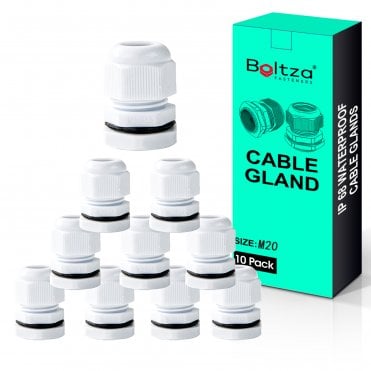
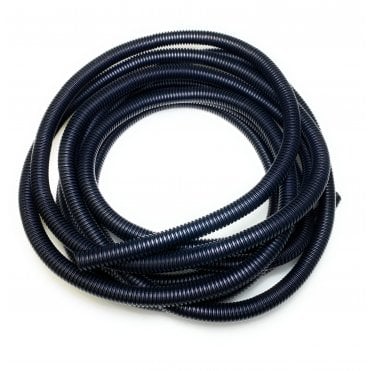
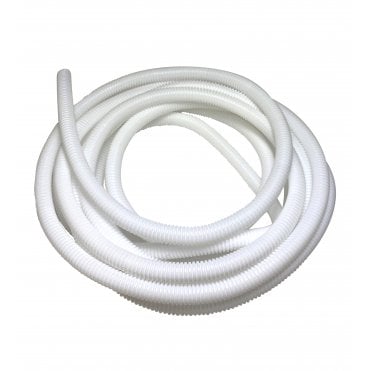
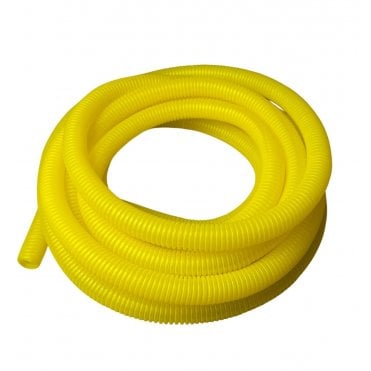
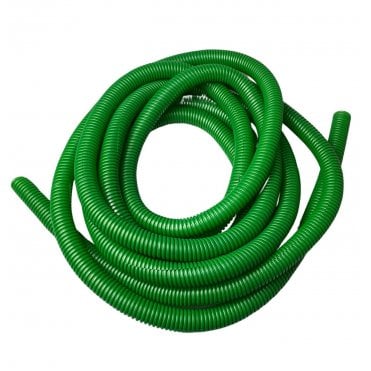
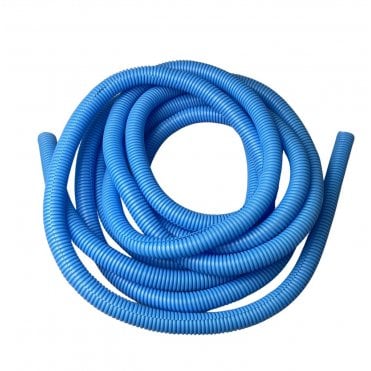
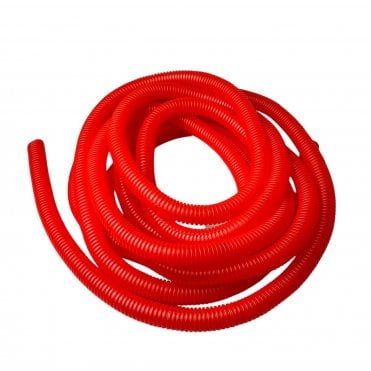
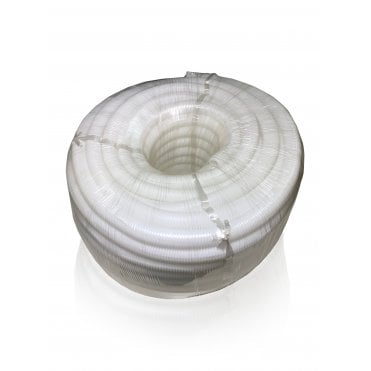
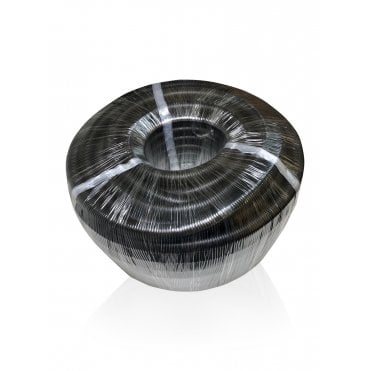
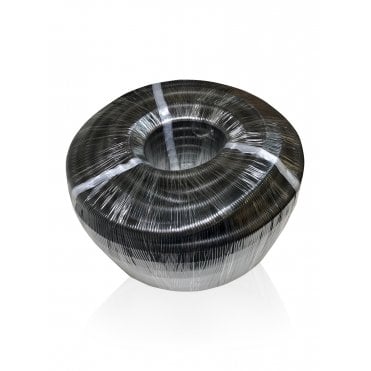
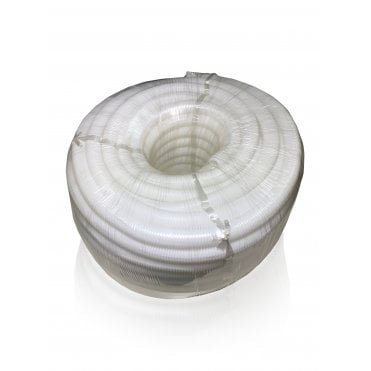
Flexible Cable Conduit and Accessories
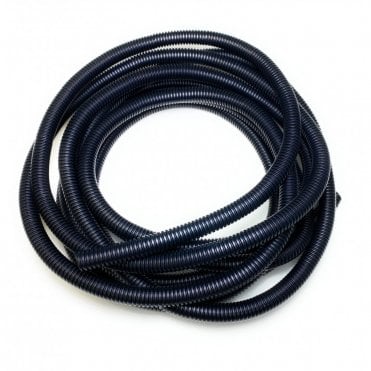
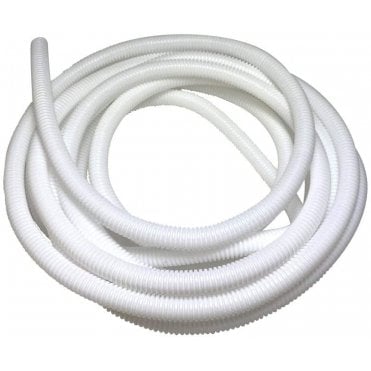
Flexible cable conduit provides a protective route for compatible wiring and cable bundles. Its corrugated construction allows the tube to follow curved routes and work around suitable equipment, machinery, vehicle or workshop installations where rigid trunking may not be practical.
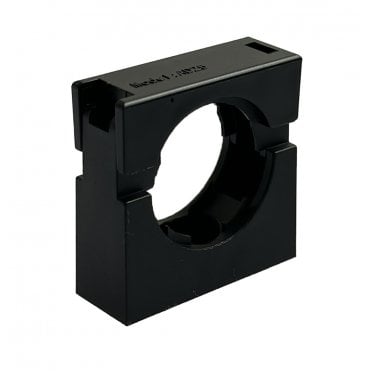
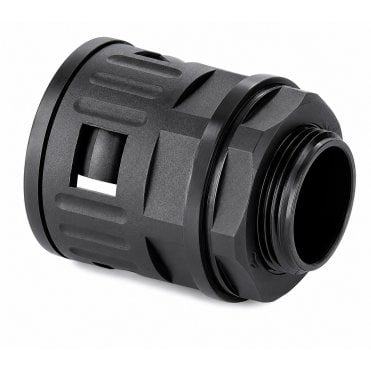
This department includes split and non-split corrugated conduit, straight conduit connectors, support brackets, push-in conduit clips and nylon cable glands. Each component performs a different job, so dimensions and compatibility should be checked across the complete installation rather than selecting parts by colour or nominal size alone.
Split and Non-Split Corrugated Conduit
Split Flexible Conduit
Split conduit has an opening along its length, allowing it to be fitted around an existing cable bundle without disconnecting or feeding every cable through from one end. It can be useful for organising installed wiring, adding protection to an existing cable route or providing easier access during later maintenance.
Check the internal space available for the cable bundle and the conduit’s actual outside diameter. The split must close correctly around the cables without being forced apart by an oversized bundle.
Non-Split Flexible Conduit
Non-split conduit forms a continuous tube around the cables. Wiring normally needs to be fed through the conduit from an open end before the complete route is connected or secured.
This construction may provide more complete coverage than split tubing, but suitability still depends on the conduit material, wall construction, fittings and installation method. Non-split construction alone does not establish an ingress-protection, flame-resistance or outdoor rating.
Choosing the Correct Conduit Size
Conduit may be described using a nominal size, internal diameter, outside diameter or an AD reference. These measurements are not always identical. Use the dimensional information supplied for the individual product and matching fittings.
- Cable bundle: measure the complete group of cables at its widest point without compressing them.
- Internal space: allow enough room to install the cables without crushing insulation or forcing the conduit closed.
- Outside diameter: use the documented outside diameter when selecting brackets, clips and compatible connectors.
- Length: measure the complete route and allow for bends, terminations and reasonable installation tolerance.
- Bend requirements: follow the documented minimum bend radius for the conduit and the cables inside it.
- Environment: verify the required temperature, ultraviolet, moisture, oil, chemical and abrasion resistance.
Do not use one generic “Size” attribute for every measurement. Conduit inside diameter, outside diameter, length, connector size, gland thread and cable clamping range should remain separate.
Flexible Conduit Straight Connectors
Straight connectors are used to join compatible flexible corrugated conduit sections or connect them as specified by the individual fitting design. A secure connection depends on the connector matching the conduit’s documented outside diameter and profile.
Do not assume that two components are compatible merely because they share a similar M-size or nominal diameter. Compare the conduit AD measurement, fitting dimensions, thread information and manufacturer compatibility before ordering.
Claims such as waterproof, dustproof or salt-resistant apply only where the exact connector has supporting test documentation and has been assembled with compatible conduit under the stated conditions. A fitting cannot automatically provide an ingress rating to the complete installation.
Conduit Brackets and Support Clips
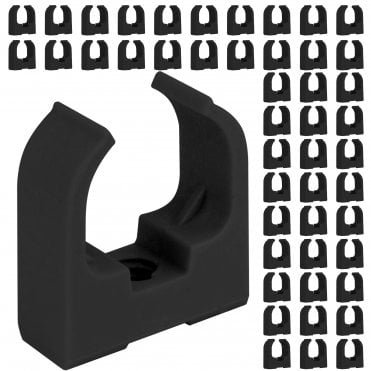
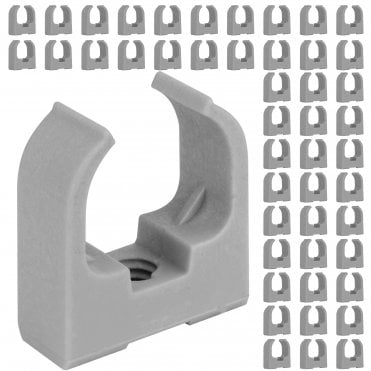
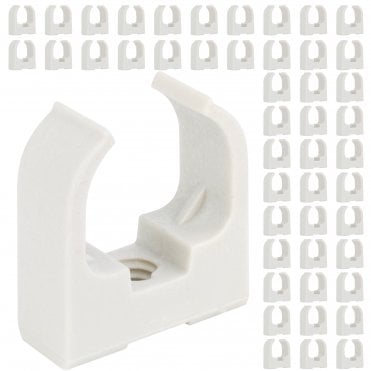
Conduit brackets and clips support flexible tubing along a suitable mounting surface. Select them according to the conduit’s actual outside diameter, the fixing method and the material into which the support will be installed.
The conduit should sit securely without being crushed, distorted or forced into a clip that is too small. Support spacing depends on the conduit, cable load, route and installation requirements; do not apply one universal spacing measurement across every product.
A conduit support is not automatically suitable for every wall, panel or vehicle surface. Confirm that the chosen screws, push-in fixing or other mounting method is appropriate for the base material.
Nylon Cable Glands
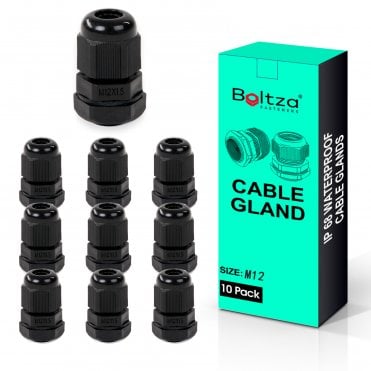
Cable glands provide a controlled cable entry through compatible panels, boxes and enclosures. Depending on the exact design, the gland may grip the cable and help provide sealing around a cable within its documented clamping range.
Selecting a cable gland requires more than choosing an M-thread size. Check the thread diameter and pitch, mounting-hole requirement, panel thickness, cable clamping range, material and any documented sealing or strain-relief performance.
An IP rating applies only to the exact tested product and installation arrangement. Correct cable diameter, seal position, tightening method, mounting surface and enclosure construction can all affect the finished result.
How to Select a Complete Conduit System
- Conduit type: choose split tubing for access around installed cables or non-split tubing where a continuous tube is required.
- Conduit dimensions: compare internal capacity, outside diameter and total length.
- Cable requirements: allow sufficient space without exceeding the permitted cable fill or bend requirements.
- Connector compatibility: match the fitting to the documented conduit profile and outside diameter.
- Support method: select brackets or clips suitable for the conduit diameter and mounting surface.
- Cable entry: match cable glands using both the thread specification and cable clamping range.
- Material: confirm the conduit, connector, bracket and gland materials individually.
- Environment: verify any required outdoor, ultraviolet, temperature, chemical or ingress-protection rating.
- Colour: use colour for appearance or identification unless a documented material difference provides another property.
Planning and Installing Flexible Conduit
- Identify the cable route and confirm that the selected conduit is suitable for the intended installation.
- Measure the cable bundle and compare it with the conduit’s documented internal capacity.
- Plan bends, entry points, supports and connections before cutting the conduit.
- Cut the conduit cleanly using an appropriate tool without damaging cables or leaving hazardous edges.
- Fit compatible connectors, brackets, clips and glands according to their individual instructions.
- Support the conduit without crushing it or forcing it below the permitted bend radius.
- Inspect the completed route for loose fittings, excessive cable compression and unsupported sections.
Electrical work must follow the applicable installation rules, product instructions and safety requirements. Isolate relevant circuits before working near existing wiring and use a suitably competent installer where required.
Typical Applications
- Routing compatible electrical or control wiring
- Organising cable runs in equipment and machinery
- Protecting suitable cable bundles from contact and abrasion
- Managing wiring in workshops, garages and storage areas
- Covering existing cables using split conduit
- Supporting flexible conduit with matching brackets or clips
- Creating suitable cable entries through boxes and enclosures
These are general application examples rather than universal suitability claims. Check the exact product specification and complete installation requirements before use.
Related Products
- Browse cable clips for nail-in, self-adhesive, push-in and specialist cable-fixing options.
- Explore cable management products for sleeves, organisers and general cable-tidying solutions.
- Choose cable ties for bundling compatible cables before or alongside conduit installation.
Frequently Asked Questions
What is the difference between split and non-split conduit?
Split conduit opens along its length and can be installed around existing cables. Cables normally need to be fed through non-split conduit from an open end.
How do I choose the correct conduit size?
Measure the complete cable bundle and compare it with the conduit’s documented internal capacity. Also check the actual conduit outside diameter when selecting connectors, brackets and clips.
What does AD mean on conduit fittings?
AD is commonly used to identify the applicable conduit outside diameter. Check the individual dimensional specification because nominal and actual measurements may differ.
Can I select a cable gland using the thread size alone?
No. You must also check the cable clamping range, thread pitch, mounting hole, panel thickness and required sealing performance.
Are all conduit products waterproof?
No. Waterproof or ingress-protection claims must be supported for the exact product and assembled installation. Flexible conduit, connectors, clips and glands do not share one universal rating.
Can flexible cable conduit be used outdoors?
Only where the exact conduit and every necessary fitting are documented for the expected ultraviolet exposure, moisture, temperature and length of use.
Will every connector fit corrugated conduit of the same nominal size?
Not necessarily. Compare the conduit’s actual outside diameter, corrugation profile and the fitting manufacturer’s compatibility information.