
Cable Tie Guns & Tensioning Tools
Shop manual cable tie guns for controlled tensioning and cutting of nylon and stainless steel cable ties. Choose tools for standard nylon ties or dedicated metal-tie tools covering different strap widths.
Check the cable-tie material, width, thickness and locking construction against the individual tool specification before ordering.
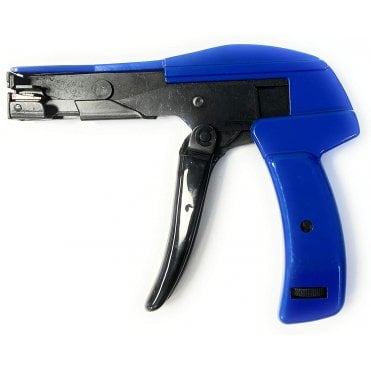
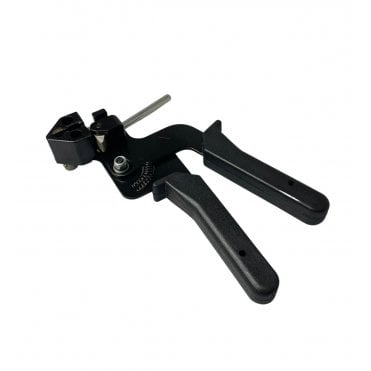
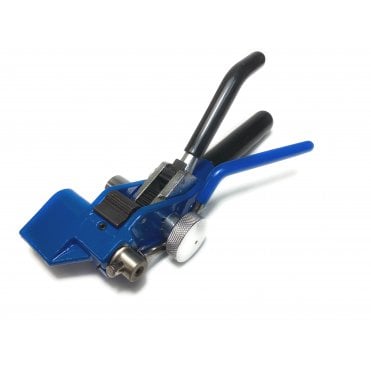
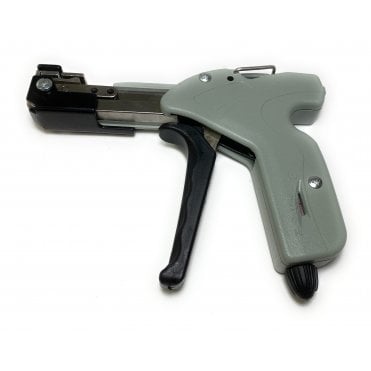
Cable Tie Guns and Installation Tools
Cable tie guns help installers tighten cable ties and trim the surplus strap more consistently than ordinary hand pulling and side cutters. They are useful for electrical work, wiring looms, control panels, machinery, vehicle wiring and other installations involving repeated cable bundling.
The On1shelf range includes manual tensioning and cutting tools for nylon cable ties and separate tools designed for stainless steel cable ties. These products may also be described as cable tie tensioners, zip-tie guns, cable tie pliers or cable tie installation tools.
No cable tie gun is universally compatible. Before ordering, check the intended tie material, strap width, strap thickness and locking construction against the exact tool specification.
Nylon and Stainless Steel Cable Tie Guns
Nylon and stainless steel cable ties require different installation tools. A tool designed for ordinary plastic ties should not be used on a metal strap unless that compatibility is specifically documented.
- Nylon cable tie guns: grip the projecting nylon tail, apply tension and cut the surplus strap when the selected tension is reached. They are commonly used for electrical, automotive and general cable-management work.
- Stainless steel cable tie tools: are constructed to tension and cut compatible metal straps. Different tools may be required for ball-lock, ladder-style or buckle-fastened ties.
The phrase “stainless steel cable tie gun” should describe a tool intended for installing stainless steel ties. It must not be assumed that the complete tool body is manufactured from stainless steel unless this is confirmed in the product specification.
Check the Compatible Cable-Tie Width
Every cable tie gun has a specified strap-width range. A tool intended for 2.4–4.8 mm nylon ties may not accept a 7.6 mm or 12 mm strap, while a wide metal-tie tool may not grip or cut a much narrower tie correctly.
Width alone does not guarantee compatibility. Also check:
- Cable-tie material
- Minimum and maximum strap width
- Maximum strap thickness
- Locking-head or buckle construction
- Coated or uncoated metal strap
- Tool tensioning mechanism
- Cutting method and replacement-blade availability
Do not force an incompatible strap into the nose or gripping mechanism. This can damage the tie, cutting blade or tool.
Adjustable Tension Control
Selected cable tie guns include an adjustable tension control. This allows the installer to change how firmly the tool pulls the tie before cutting the excess tail.
Begin with a lower setting and increase it gradually while checking the cable bundle. Excessive tension can crush insulation, deform flexible tubing, damage components or overstress the cable tie.
A numbered tension setting is not automatically a measurement in newtons, kilograms or pounds. Do not describe a tool as calibrated or claim that it applies a specific force unless the manufacturer provides documented calibration data for that model.
The tool setting also does not represent the tensile strength or safe working load of the installed cable tie. Cable-tie strength must be verified separately for the exact tie.
Why Use a Cable Tie Gun?
- More consistent tightening across repeated installations
- Faster installation when processing multiple cable ties
- Trimming closer to the locking head
- Reduced risk of leaving a long projecting tail
- Adjustable tension on compatible tool models
- Easier installation in selected confined or awkward locations
A flush cut depends on the tool, blade condition, cable-tie construction and correct operation. Inspect each finished tie rather than assuming that every cut will automatically be smooth.
Choosing the Correct Tool
Start with the cable ties being installed rather than choosing a tool only by price or appearance.
- Identify whether the cable tie is nylon or stainless steel.
- Measure or confirm the strap width and thickness.
- Check the locking design, particularly for metal ties.
- Compare these details with the tool’s documented compatibility range.
- Confirm whether adjustable tension and automatic cutting are required.
- Consider access around the bundle and the available working space.
- Check whether replacement blades or other service parts are available.
For mixed installations, more than one tool may be required. Do not treat a stated maximum width as proof that the tool works with every material and tie construction below that measurement.
Using a Nylon Cable Tie Gun
- Wrap a compatible cable tie around the intended bundle.
- Insert the tail through the locking head and tighten it by hand.
- Set the tool initially to a low tension level.
- Position the tool nose against the cable-tie head.
- Feed the projecting tail through the tool’s gripping mechanism.
- Operate the handle gradually until the tool tensions and cuts the tie.
- Inspect the bundle, tie head and cut edge before continuing.
Stop if the cable insulation begins to compress or the tie head becomes distorted. Increase the setting only after testing the installation on a representative bundle.
Using a Stainless Steel Cable Tie Tool
Wear suitable hand and eye protection when installing metal ties because cut strap ends and edges may be sharp.
- Confirm that the tool matches the metal-tie width, thickness and locking design.
- Install and hand-tighten the tie according to its instructions.
- Insert the projecting metal strap into the tool correctly.
- Position the nose firmly against the locking head or buckle.
- Apply tension gradually without crushing the protected components.
- Operate the cutter only after the required tension has been reached.
- Check that the remaining edge is secure and does not present a hazard.
Ball-lock, ladder-style and buckle-fastened stainless steel ties do not necessarily use the same installation process. Follow the instructions for the exact tie and tool combination.
Tool Maintenance and Safe Storage
Inspect the cable tie gun before use. A blunt blade, worn gripping mechanism or damaged nose can produce poor tensioning, incomplete cuts and sharp projecting edges.
- Keep the gripping and cutting areas clean
- Remove nylon or metal fragments after use
- Do not use the tool as ordinary pliers or side cutters
- Replace worn blades only with compatible parts
- Store the tool in a dry location with its mechanism protected
- Keep hands away from the cutting area during operation
Do not dismantle or modify a tensioning mechanism unless the manufacturer’s instructions specifically provide for servicing.
Common Applications
- Electrical cabinets and control panels
- Automotive and vehicle wiring looms
- Machinery and equipment assembly
- Network and telecommunications installations
- Heating, ventilation and ducting work
- Solar and outdoor cable routing
- Workshop and maintenance tasks
- Repeated cable bundling in production environments
These are general examples. The cable tie, tool, bundle and installation environment must all be suitable for the actual application.
Related Cable-Tie Products
- Choose standard nylon cable ties for everyday bundling with a compatible nylon cable tie gun.
- Check the wider strap dimensions before using a tool with heavy-duty cable ties.
- Use a dedicated metal-tie installation tool with compatible stainless steel cable ties.
- Check the individual construction before installing special cable ties.
Frequently Asked Questions
What does a cable tie gun do?
It grips the projecting cable-tie tail, applies tension and trims the excess strap. Selected tools include an adjustable tension setting for more consistent repeated installation.
Can one cable tie gun install every size?
No. Each tool has a specified range covering particular cable-tie materials, widths, thicknesses and constructions.
Can a nylon cable tie gun cut stainless steel ties?
Not unless the tool manufacturer specifically documents that capability. Stainless steel ties normally require a dedicated metal-tie tensioning and cutting tool.
Does the tension setting show the applied force?
Not necessarily. A numbered setting is usually an adjustment reference rather than a calibrated force measurement unless the manufacturer states otherwise.
Will a cable tie gun produce a flush cut?
A suitable, correctly adjusted tool with a sharp blade can trim close to the cable-tie head. The result still depends on the tie, tool condition and correct operation.
What width cable ties fit the tool?
Check the individual product specification. The current range includes tools for narrow nylon ties and wider stainless steel ties, but their compatibility ranges are not interchangeable.
Can a cable tie gun prevent overtightening?
An adjustable setting can improve consistency, but it does not eliminate the need to test and inspect the installation. An unsuitable setting can still damage insulation or components.
Are cable tie guns suitable for releasable ties?
Usually they are intended for permanent ties whose surplus tails can be cut. Cutting the tail of a releasable tie may prevent it from being reused for a larger bundle.