
Special Cable Ties for Specialist Applications
Shop special cable ties designed for applications that ordinary nylon ties cannot cover. The range includes metal-detectable, marker, low-profile, double-locking, double-loop and stainless-steel-pawl cable ties.
Compare the locking design, material, dimensions, maximum bundle diameter, verified tensile strength and operating conditions before selecting a tie.


Special Cable Ties for Purpose-Specific Installations
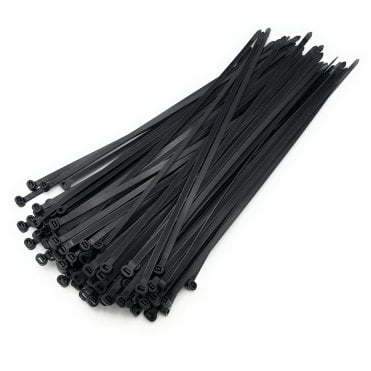
Special cable ties are designed around a particular locking method, material, head shape or identification function. Unlike ordinary nylon ties, they may provide features such as metal detection, a writable marker area, a low-profile head, two separate loops or a stainless-steel locking pawl.
No single special cable tie is suitable for every demanding installation. Choose the construction according to the intended function rather than assuming that terms such as heavy duty, industrial or specialist establish a particular level of performance.
Types of Special Cable Tie
- Metal-detectable cable ties: contain a detectable additive intended to help inspection equipment identify contamination in suitable food, beverage, pharmaceutical and manufacturing environments.
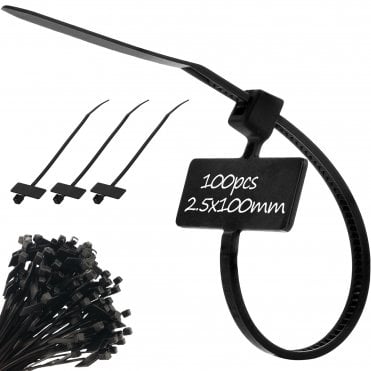
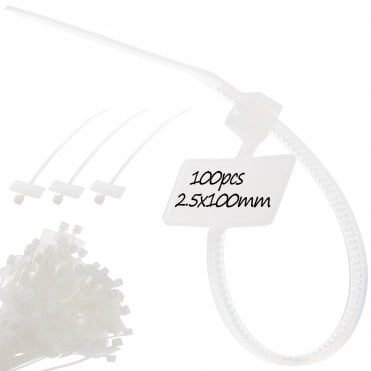
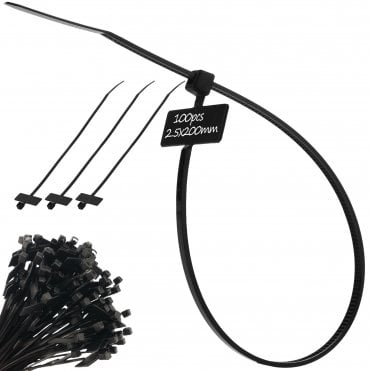
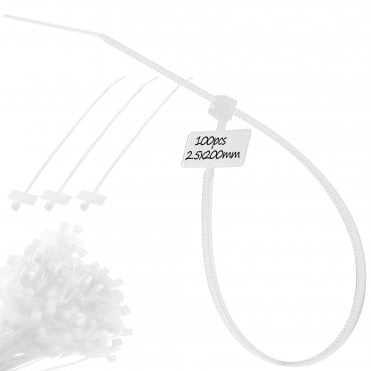
- Marker cable ties: combine cable bundling with an identification area that can be marked or labelled using a compatible method.
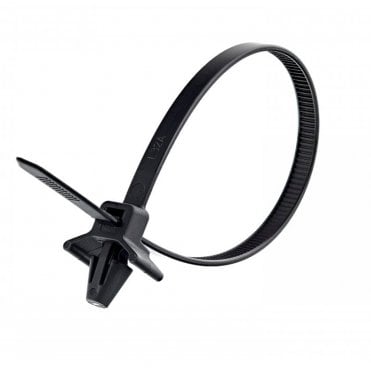
- Low-profile cable ties: use a flatter or differently positioned locking head to reduce protrusion in confined installations.
- Double-locking cable ties: use a specialist locking construction. The exact design and verified performance must be checked for the selected product.
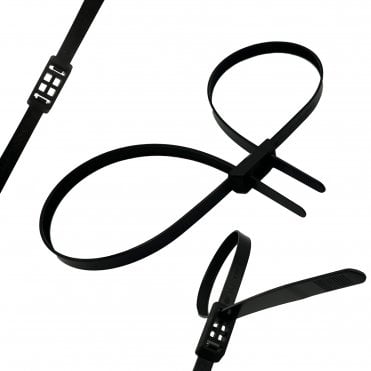
- Double-loop cable ties: form two separate loops for organising or separating two bundles with one fastening component.
- Stainless-steel-pawl nylon ties: combine a nylon strap with a metal locking component. They are not full-metal stainless steel cable ties.
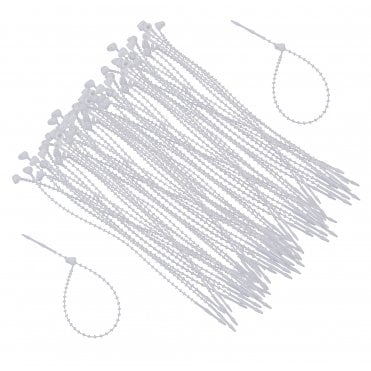
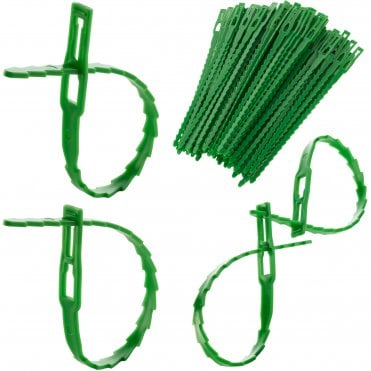
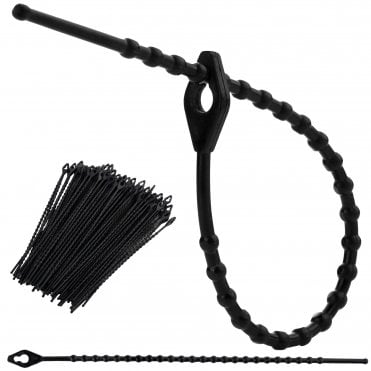
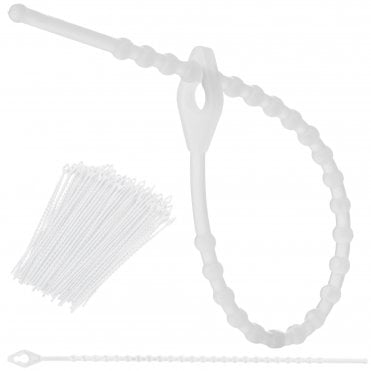
- Reusable beaded ties: use a beaded strap or twist-lock design that can be opened and adjusted when the exact product is designed for reuse.
- Special-temperature cable ties: use a documented material formulation for temperatures outside the range of ordinary nylon. The precise operating range must be taken from the individual product specification.
Metal-Detectable Cable Ties
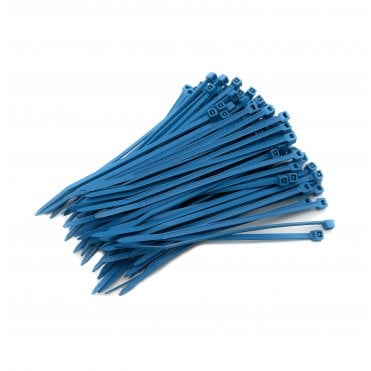
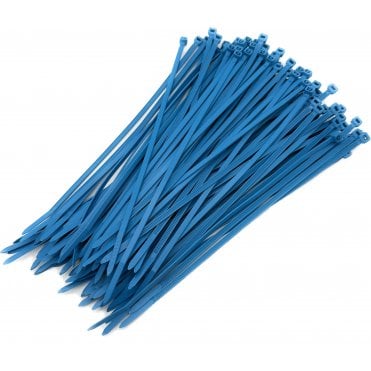
Metal-detectable cable ties are manufactured using a material containing metallic particles or another detectable additive. They are commonly supplied in blue to make visual identification easier around production equipment.
Detection performance depends on the tie formulation, fragment size, orientation, production speed, product being processed and the sensitivity and calibration of the inspection equipment. A blue cable tie is not automatically metal detectable, and a metal-detectable tie is not automatically detectable by every X-ray system.
Test the selected tie with the actual inspection equipment and operating conditions before approving it for use. Where X-ray detectability, food-contact compliance or a specific regulatory approval is required, obtain documentation for the exact product rather than relying on a generic category statement.
Metal-detectable ties can support a business's contamination-control procedures, but the product itself should not be described as “HACCP compliant”. HACCP is a food-safety management system covering the complete process rather than a certification automatically granted to a cable tie.
Stainless-Steel-Pawl Nylon Cable Ties
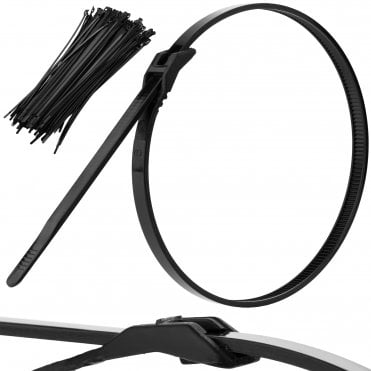
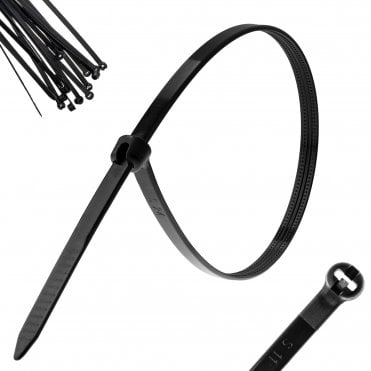
These cable ties have a nylon body with a stainless-steel locking pawl inside the head. The metal component provides a different locking construction from an ordinary all-nylon pawl, but the product remains primarily a nylon cable tie.
Do not present stainless-steel-pawl nylon ties as equivalent to full-metal SS304 or SS316 cable ties. Their operating temperature, weather resistance and chemical resistance are still affected by the nylon strap.
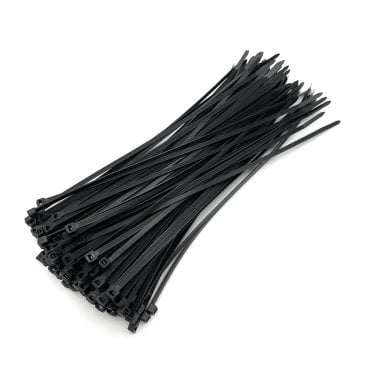
The stainless-steel grade of the pawl, nylon formulation, minimum loop tensile strength and operating temperature must be verified for each exact size. Black colour alone does not prove that the nylon is ultraviolet stabilised.
Marker and Identification Cable Ties
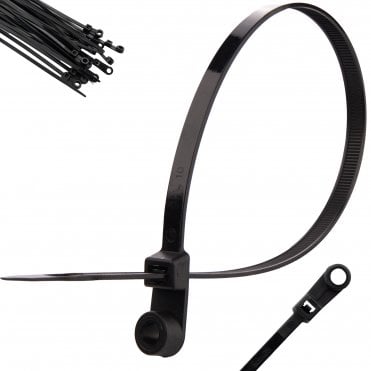
Marker cable ties include an identification tab that allows a cable, component or bundle to be marked while it is secured. They are useful for control panels, wiring looms, stock identification, maintenance work and equipment organisation.
Check the size and position of the marker area before ordering. The tab may sit inside or outside the loop depending on the design. Also confirm that the selected pen, printed label or marking method is compatible with the nylon surface and expected environment.
Marker ties provide identification rather than certified traceability. Where permanent asset identification, serialisation or regulatory records are required, use an appropriate documented identification system.
Low-Profile Cable Ties
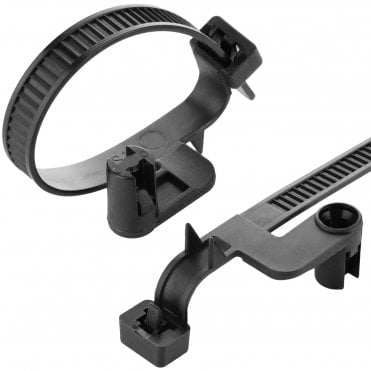
Low-profile cable ties use a compact head intended to reduce protrusion and make better use of restricted space. Selected designs thread the strap parallel to the head or place the serrations on the outside, leaving a smoother surface against the bundle.
This construction can be useful near cable insulation, hoses, trim panels and other components where a conventional projecting head would be inconvenient. It does not remove the need to control tension or inspect the trimmed end.
Low profile does not automatically mean releasable, reusable, weatherproof or suitable for automotive use. These properties must be confirmed separately.
Double-Locking and Double-Loop Cable Ties
A double-locking tie uses a specialist head or strap construction intended to provide more than one locking engagement. The term does not establish a tensile value or prove suitability for vibration unless the exact product has documented test results.
Double-loop ties and nylon double cuffs can create two loops with one fastening component. They may be useful for separating cable groups, pairing compatible hoses or organising two adjacent bundles.
The load may not be shared equally between both loops. Do not treat the stated tensile result of the cable tie as the safe working load of each loop or of the completed installation.
Releasable and Reusable Designs
A cable tie should be described as reusable only when it includes a purpose-made release or reopening mechanism. A standard locking tie does not become reusable merely because it can be loosened using a tool.
Beaded and twist-lock ties can be convenient for temporary bundling and installations that require adjustment. Check the permitted bundle diameter, locking method and expected number of operating cycles for the exact design.
For a wider selection of conventional reusable ties, visit the releasable cable ties department.
Choosing the Correct Special Cable Tie
Start by identifying the specialist function the installation requires. Then compare the following product-level specifications:
- Cable-tie material and material grade
- Strap length, width and thickness
- Minimum and maximum bundle diameter
- Locking-head and pawl construction
- Verified minimum loop tensile strength
- Operating-temperature range
- Indoor, outdoor or ultraviolet-resistance documentation
- Chemical and moisture resistance
- Metal and X-ray detection capability
- Food-contact, flammability or other documented approvals
- Releasable or non-releasable operation
Do not estimate tensile strength from width alone. Two cable ties with similar dimensions can perform differently because of their material, strap thickness, moulding, serration and locking construction.
Special Cable Ties with Integrated Fixings
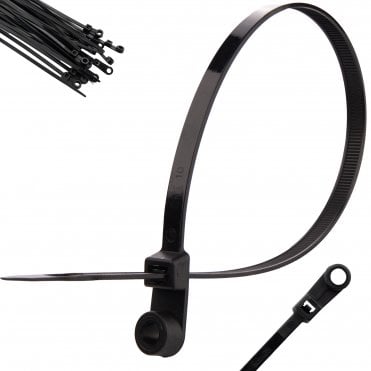
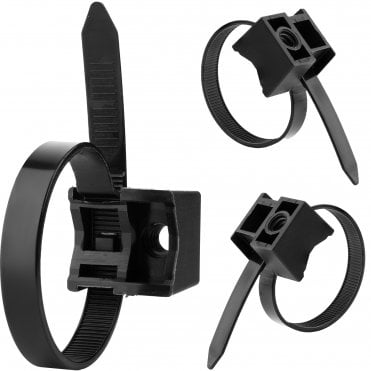
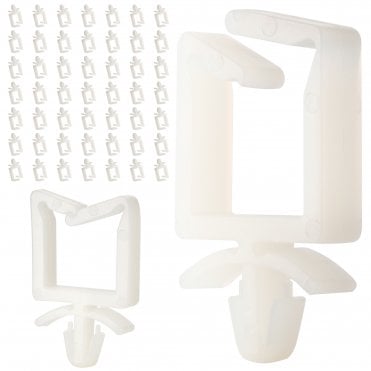
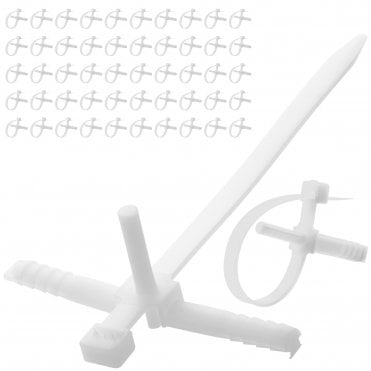
Mountable-head, saddle-mount, push-mount and expandable-plug cable ties combine bundling with attachment to a panel, screw or suitable substrate. Their compatibility depends on the fixing-hole diameter, panel thickness, mounting method and cable-tie dimensions.
These products are better grouped within the cable tie mounts and fixing bases department, where shoppers can compare the different attachment methods.
Installation and Safety
- Confirm the required specialist feature and exact product specification.
- Inspect the tie for damaged teeth, distortion or contamination.
- Position the tie around the intended bundle without twisting the strap.
- Insert the tail through the correct locking path.
- Tighten gradually to avoid damaging cables, hoses or soft components.
- Use a compatible cable tie gun or tensioning tool where controlled installation is required.
- Trim the surplus tail without leaving a hazardous projecting edge.
- Check that the specialist function, fixing or identification area remains accessible.
Cable ties must not be used as lifting equipment, fall protection, structural restraints or certified vehicle load restraints unless an exact product is independently approved for that purpose.
Related Cable Tie Ranges
- Choose standard nylon cable ties for ordinary cable bundling and everyday fastening.
- Choose heavy-duty cable ties where a wider, documented nylon tie is required without another specialist function.
- Choose releasable cable ties when the bundle must be opened or adjusted regularly.
- Choose full-metal stainless steel cable ties for suitable high-temperature, outdoor and corrosive environments.
- Choose cable tie mounts and fixing bases for panel, wall, screw and push-mount installations.
Frequently Asked Questions
What makes a cable tie a special cable tie?
It has a purpose-specific material, head, locking system, mounting feature or identification function that distinguishes it from an ordinary nylon cable tie.
Are metal-detectable cable ties also X-ray detectable?
Only when the exact material is documented for X-ray detection. Actual detectability depends on the fragment, equipment, calibration and production conditions.
Are metal-detectable cable ties HACCP compliant?
A cable tie can support a HACCP-based contamination-control system, but HACCP applies to the complete food-safety process. Do not describe the product itself as HACCP compliant without precise supporting certification.
Are stainless-steel-pawl nylon ties fully stainless steel?
No. They have a nylon strap and head containing a stainless-steel locking component. Full-metal stainless steel ties use metal for the strap and locking head.
Are black cable ties automatically UV resistant?
No. The nylon formulation must be documented as ultraviolet stabilised. Colour alone is not enough to establish outdoor performance.
Are double-locking cable ties stronger?
Not automatically. Their strength must be confirmed from the verified tensile specification for the exact material, dimensions and locking construction.
Can special cable ties be reused?
Only products with a purpose-made release, beaded or reusable locking mechanism should be reopened. Standard self-locking ties normally need to be cut for removal.
What is a low-profile cable tie?
It uses a compact or differently positioned head intended to reduce protrusion and make better use of confined installation space.