
Stainless Steel Cable Ties
Shop full-metal stainless steel cable ties for cable bundling and fastening in demanding environments. Choose from SS304 and SS316 ties in multiple widths and lengths, including long and heavy-duty sizes.
Compare the stainless-steel grade, width, length, maximum bundle diameter and verified tensile strength before ordering. Temperature and corrosion resistance must be checked for the exact product and installation environment.
Stainless Steel Cable Ties for Demanding Environments
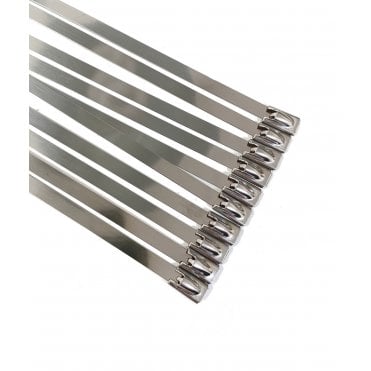
Stainless steel cable ties provide a durable alternative to conventional nylon ties where temperature, weathering, ultraviolet exposure, chemicals or corrosion could affect a plastic fastening. They are commonly used for securing cables, hoses, insulation, signs and compatible components in industrial, construction, automotive and outdoor installations.
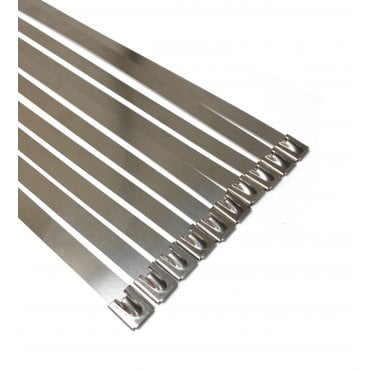
The On1shelf range includes full-metal SS304 and SS316 cable ties in different widths and lengths. These products are also commonly called metal cable ties, stainless steel zip ties, metal tie wraps or ball-lock cable ties.
Stainless steel does not make every tie suitable for every environment. The grade, dimensions, locking design, documented tensile strength and temperature specification must match the intended application.
SS304 or SS316 Stainless Steel?
The stainless-steel grade is one of the most important buying decisions. SS304 and SS316 both provide useful corrosion resistance, but they are not interchangeable in every environment.
- SS304 stainless steel cable ties: a practical choice for general industrial, construction and outdoor fastening where strong corrosion resistance is required but severe chloride or saltwater exposure is not expected.
- SS316 stainless steel cable ties: provide greater resistance to chlorides and are normally preferred for coastal, marine and more aggressive chemical environments.
Do not describe SS304 as marine grade merely because it is stainless steel. Where the installation will be exposed to saltwater, salt spray or high chloride levels, select a suitably documented SS316 product.
Neither grade should be described as completely rust-proof. Contamination, incompatible metals, chemicals, temperature and prolonged exposure can still affect stainless steel. Check the exact material specification where corrosion could create a safety or maintenance risk.
Full-Metal Ties and Stainless-Steel Pawl Nylon Ties
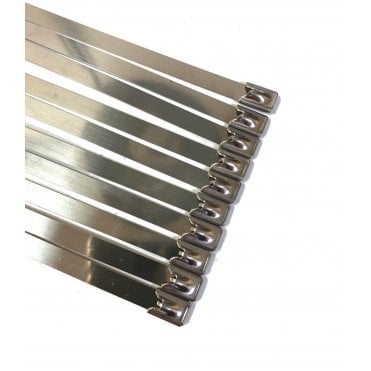
A full-metal stainless steel cable tie has a stainless-steel strap and locking head. This is different from a nylon cable tie containing only a stainless-steel locking pawl.
- Full-metal stainless steel ties: selected for their metal construction, temperature capability, weather resistance and corrosion resistance.
- Stainless-steel pawl nylon ties: have a nylon strap with a metal locking component. Their performance and temperature range remain limited by the nylon body.
Stainless-steel pawl nylon ties should not be presented as equivalent to full-metal SS304 or SS316 cable ties. They are better placed within the special cable ties range.
Choosing the Correct Width and Length
Length determines the approximate bundle capacity, while width, strap thickness and locking construction contribute to the mechanical performance of the tie.
Measure the intended bundle and compare it with the stated maximum bundle diameter. The complete tie length cannot be used as the loop circumference because part of the strap must pass through the locking head.
A wider metal tie is not automatically suitable for a particular load. Use only the verified tensile specification supplied for the exact width, thickness, material grade and locking construction. A minimum loop tensile result should not automatically be treated as the safe working load of the completed installation.
Self-Locking Ball-Lock Cable Ties
Many stainless steel cable ties use a self-locking ball-bearing mechanism. The tail passes through the head and the internal ball grips the smooth metal strap as the tie is tightened.
Standard ball-lock stainless steel ties are normally non-releasable. Once installed, they generally need to be cut for removal. They should not be described as reusable unless the exact product has a purpose-made releasable mechanism.
Position the head carefully before tightening. Once the tie has been fully tensioned, repositioning it may not be possible without removing and replacing the tie.
Temperature, Weather and Chemical Resistance
Uncoated stainless steel cable ties can tolerate considerably higher temperatures than ordinary nylon ties, but the correct operating range must be taken from the exact product documentation. Do not apply one temperature figure automatically to every SS304 or SS316 tie.
Coatings, sleeves and protective channels can have lower temperature limits than the metal tie underneath. If a coated or protected tie is introduced into the range, show the complete assembly's verified operating range rather than the limit of the bare stainless steel.
Chemical resistance also depends on the stainless-steel grade, chemical concentration, exposure time and temperature. SS316 is normally the better option for chloride-rich environments, but suitability should still be confirmed for the specific installation.
Common Applications
- Bundling cables in industrial machinery and equipment
- Securing wiring in suitable outdoor installations
- Fastening compatible signs, labels and identification plates
- Construction, heating, ventilation and ducting work
- Solar, telecommunications and utility installations
- Securing suitable insulation and heat-protection materials
- Automotive and workshop applications
- Coastal and marine installations using the appropriate grade
These are general examples rather than universal approvals. Do not use ordinary stainless steel cable ties as lifting equipment, fall protection, structural restraints or certified vehicle load restraints.
Installing Stainless Steel Cable Ties
- Confirm the required grade, dimensions and verified specification.
- Check that the tie and surrounding components are clean and undamaged.
- Wear suitable hand and eye protection because metal edges and cut ends can be sharp.
- Place the tie around the bundle and insert the tail through the locking head.
- Tighten gradually, avoiding excessive pressure on cable insulation, hoses or soft materials.
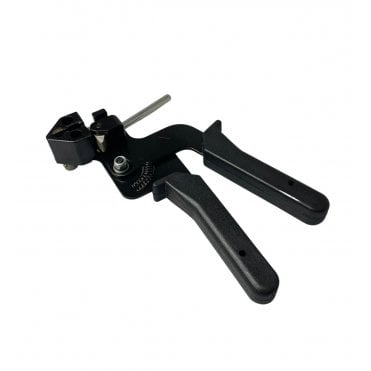
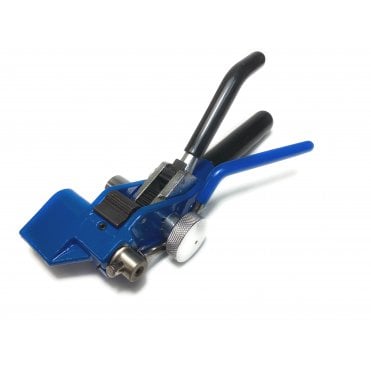
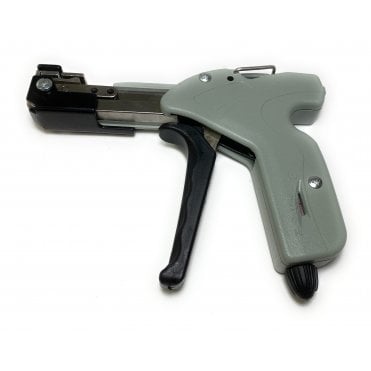
- Use a compatible stainless steel cable-tie tensioning and cutting tool where controlled tension and a clean cut are required.
- Trim the surplus tail without leaving a hazardous projecting edge.
- Inspect the finished installation and replace any tie that is distorted or damaged.
A protective channel or suitable barrier may be required where the metal strap could damage soft cable insulation or where direct contact between dissimilar metals could cause problems.
Stainless Steel, Heavy-Duty Nylon or Releasable Ties?
- Choose stainless steel cable ties where metal construction, high-temperature capability or greater resistance to weather and corrosion is required.
- Choose heavy-duty nylon cable ties for demanding general fastening where stainless steel is unnecessary.
- Choose standard nylon cable ties for ordinary indoor cable management and everyday fastening.
- Choose releasable cable ties when the bundle needs to be opened or adjusted regularly.
- Choose special cable ties when a stainless-steel locking pawl, identification feature or specialist head design is required.
Frequently Asked Questions
What is the difference between SS304 and SS316 cable ties?
SS304 is suitable for many general industrial and outdoor applications. SS316 provides greater resistance to chlorides and is normally preferred for coastal, marine and more aggressive chemical environments.
Are SS304 cable ties marine grade?
SS304 should not normally be marketed as marine grade. For saltwater, salt-spray and chloride-rich environments, suitably documented SS316 ties are generally the more appropriate choice.
Can stainless steel cable ties be reused?
Standard self-locking ball-lock ties are normally non-releasable and must be cut during removal. Do not attempt to reuse a tie that has been cut, bent or damaged.
Can stainless steel cable ties be used outdoors?
Stainless steel ties are commonly used outdoors because they resist ultraviolet ageing and weathering better than ordinary nylon. The correct grade and product specification must still be selected for the environment.
What temperature can stainless steel cable ties withstand?
The temperature range depends on the grade, locking construction, coating and manufacturer specification. Check the selected product page rather than assuming that one temperature range applies to every stainless steel tie.
How are stainless steel cable ties tightened?
Feed the tail through the locking head and pull it tight. A compatible tensioning and cutting tool can provide more consistent tension and trim the surplus strap more cleanly.
Are stainless steel cable ties stronger than nylon ties?
They can provide substantially different mechanical performance, but strength must be compared using the verified tensile specification of each exact product. Material or width alone is not a safe basis for estimating load capacity.
Will stainless steel cable ties damage cable insulation?
They can if they are overtightened or if a sharp metal edge bears directly against soft insulation. Use controlled tension and suitable edge protection where the installation requires it.